
Since the bankcuptcy law came into effect from December 2016, with every quarter, the recovery rate has progressively been going down, notes Tamal Bandyopadhyay.

The code says the process is intended to balance the interests of all stakeholders and the resolution plan is also required to make a statement as to how it has dealt with these interests.

Bankruptcy proceedings are going at a slower pace than what the bankers had envisaged and many cases have gone beyond the 270-day timeline set under the IBC mainly because of litigation.
About 50 per cent of the accounts that availed of the EMI moratorium amid the pandemic, which made things worse in an already slowing economy, are expected to be restructured, and of these accounts that would undergo restructuring, one-third, or Rs 6-9 trillion, could turn into NPAs.

RBI deputy governor N S Vishwanathan has said the new framework was in line with the Insolvency and Bankruptcy Code guidelines.

The government on Tuesday extended the deadline for filing income tax and GST returns, raised the threshold of default that could trigger insolvency of a company, and waived charges on cash withdrawals from ATMs of other banks as a precursor to a broader stimulus package for the economy distressed by the coronavirus outbreak.

India's goal of self-reliance has been paramount in the policy and practice of the country. The COVID-19 crisis gave us lessons on how to speed up efforts in that direction, he said.

The closure of BPSL would add about three million tonnes capacity to JSW Steel's existing 18 million tonnes.

NBFCs are facing the heat of a crisis at IL&FS, which defaulted on repayment of its commercial paper dues, leading to a contagion effect in the sector.

On resolution of stressed cases, she said ICICI Bank has been taking the lead in several cases and was the first bank to refer a case to NCLT
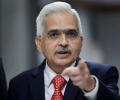
Reserve Bank Governor Shaktikanta Das on Wednesday said underlying economic activity in India continues to be strong, but external factors will cause some "dent" to the economy. Speaking at the BFSI Insight Summit 2022 organised by Business Standard, Das said the RBI tracks 70 fast moving indicators and most of them are in the "green box". It is the external sector, mired by a fear of recession or clear visibility about slowing growth in a large part of the world, where the challenges lie, he said, adding that the impact of external demand will "dent" the economy.

The National Company Law Tribunal on Tuesday approved the Jalan-Kalrock Consortium's resolution plan for the bankrupt Jet Airways.
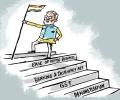
"This is the third year in a row that India makes to top 10 in Doing Business, which is a success which very few countries have done over the 20 years of the project, Without exception, the other countries that have done this are very small, population-wise, and homogeneous," Simeon Djankov, Director of Development Economics at the World bank told PTI in an interview.

'Some business families would probably have to revert to their core businesses, which the IBC will ensure.'

Apart from easing the NPA pressure on domestic banks, the RBI's move can allow companies to raise cheap, long-term loans easily now.

The opposition will seek to target the government on the issue of farmers' plight as well as their demand for a legal backing for minimum support price.

The government would be ironing out issues related to the controversial 'bail-in' clause in the earlier Bill, explore hiking the deposit insurance cover of customers, and decide whether the resolution framework should apply to public sector banks.

The Modi government could steer through Parliament 59 out of 75 Bills.

The markets will be eyeing the amendments.

The remarks by the CJI came against the backdrop of the recent remarks by Vice President Jagdeep Dhankhar who questioned the landmark 1973 Kesavananda Bharati case verdict that gave the basic structure doctrine.

Prime Minister Narendra Modi on Thursday said his government is using all channels including diplomatic to bring back high-profile economic offenders, leaving them with no option but to return to the country. Speaking at a symposium on credit flow and economic growth, he asked banks to support wealth and job creators with proactive lending while promising to stand by any loans given in right earnest. "In our attempt to bring back fugitive (economic offenders), we relied on policies and law and also used diplomatic channels.

Markets watchdog Sebi on Tuesday decided to tighten norms for utilisation of IPO proceeds by companies, introduce special situation funds to invest only in stressed assets and amend various regulations, including those on mutual funds and settlement proceedings. The board of Sebi, which met on Tuesday, also gave its nod for amending Foreign Portfolio Investor (FPI) regulations and introducing a provision for appointment or re-appointment of any person, including as a managing director or a whole time director or a manager, who was earlier rejected by the shareholders at a general meeting. Once the amended norms are in place, such appointments or re-appointments can only be done with the prior approval of the shareholders.

Banking stocks dipped with Nifty PSU Bank index falling 1.7% after the government notified the ordinance that seeks to tackle non-performing loans in the sector.

The three options are - a one-time settlement, restructuring of loans and of course go to IBC.

State-run lenders will take a lead in creation of the bad bank, but the sick asset resolution platform needs the support of private banks and other lenders to be successful, State Bank of India managing director Swaminathan J said on Thursday. If all lenders come on board, the National Asset Reconstruction Company (NARC) announced in the budget will be able to aggregate 100 per cent of a sick company's outstanding loans, which shall ultimately lead to better resolution of the asset quality stress for all. The government is yet to announce the specific contours of the NARC or the bad bank and has also only said that it is willing to provide some sovereign guarantee to help the platform.

According to the revised plan, promoter Naresh Goyal, his wife Anita Goyal and the directors nominated by the promoter would be asked to step down from the board, and the lenders, as part of the resolution process, will infuse around Rs 1,200 crore into the airline as emergency funding.

False and acrimonious debates such as Modi versus Manmohan might allow for victories that are political and partisan. But the real loser is the nation, India and Bharat, notes Arvind Subramanian, former chief economic advisor to the Modi government in its first term.

The passage of the Bankruptcy Code could set the stage for other important legislation that may see India undergo more economic change than all governments combined since the reforms implemented by P V Narasimha Rao in 1991-93, says Ben Merton.

A source said that the lenders have proposed to change the management of the beleaguered air carrier as they feel it is not possible to run the company with present management.

If the concerns over risking political capital are overcome, the long-term gains for the Indian economy will be immense, asserts A K Bhattacharya.

Dealmakers and advisors feel investors are shifting their focus to Asia Pacific, especially India, owing to geopolitical instability driven by events such as Brexit and protectionist trade wars.

Sebi has restructured its advisory committee on market data that recommends policy measures pertaining to areas like securities market data access and privacy. Rejigging its market data advisory committee, Sebi has said the panel will now have 21 members, as per the latest information with the regulator. Earlier the committee had 20 members. The committee is chaired by M S Sahoo, Professor at National Law University, Delhi and former chairperson, Insolvency and Bankruptcy Board of India (IBBI).
To make sure liquid schemes reflect the underlying portfolio risks, Sebi has said all debt papers with maturity of 30 days or more to be marked to market. Earlier, fund houses didn't have to do so for securities that had less than 60-day maturity.
For state-run lenders, the average NPAs shot up to 14.5 per cent, with IDBI Bank, UCO Bank and Indian Overseas Bank having their NPAs at above 25 per cent.
Loans of over Rs 1.8 trillion, for which agreement has been signed by banks, are likely to be referred to IBC.

Not just mid- and small-sized firms, even big ones will either sell group companies or stakes in their listed entities to tide over crisis; more sell-offs seen in coming months.

Under the plan, the government has categorised IL&FS group companies into green, amber and red based on their respective financial positions.

Bankers said the SC verdict might prolong the resolution process and force lenders to bring back cases to the drawing board.

Will the Financial Resolution and Deposit Insurance Bill endanger our bank deposits?

China Development Bank takes Reliance Communications to NCLT over loan default
